Expansion Breathwork vs Breathwork: What's the Difference?
 5 min read
Breathwork is the broad family of intentional breathing practices people use to influence their physical, mental, emotional and spiritual wellbeing. Expansion Breathwork is one approach within that family. Developed by Mark Moon in Sydney, it brings together conscious connected breathwork, somatic practices and mindfulness to support self-awareness, nervous system capacity and a more open way of living.
So every Expansion Breathwork session is breathwork, but not every breathwork session is Expansion Breathwork. The difference is not just about the breathing technique, but more about what the practice is for.
What is breathwork?
Breathwork is the intentional use of breathing practices to influence how we feel and function. It is an umbrella term, not a single method.
Some approaches are designed for relaxation, focus or stress reduction. A few minutes of slow, even breathing before a meeting is breathwork. So is coherent breathing, where you breathe at around five or six breaths a minute. Other approaches go deeper. They use a continuous, connected breath to explore emotions, behavioural patterns and our relationship with ourselves. Rebirthing breathwork and holotropic breathwork sit in this second group.
If you want a map of the main styles, the breathwork styles guide compares them side by side.
What is Expansion Breathwork?
Expansion Breathwork is Mark Moon's integrative approach to breathwork for living life well. It combines three things:
- Conscious connected breathwork: a full, continuous breath without pauses between the inhale and exhale.
- Somatic practices: attention to sensation, posture and movement, so the body is part of the process rather than a passenger.
- Mindfulness: noticing your inner experience with curiosity instead of judging it.
Rather than focusing only on symptom relief, Expansion Breathwork explores the patterns that shape how we experience ourselves and our lives. Sometimes that means processing emotions or softening protective patterns. At other times it simply means building resilience, gaining mental clarity and developing the capacity to meet life with more openness.
As Mark puts it: "The goal isn't simply to feel better. It's to live life well."
For the full background on where the method comes from, read what is Expansion Breathwork.
The difference at a glance
| Breathwork (in general) | Expansion Breathwork | |
|---|---|---|
| What it is | An umbrella term for many breathing practices | One integrative approach within breathwork, developed by Mark Moon |
| Main aim | Varies: calm, focus, energy, emotional release | Self-awareness, nervous system capacity and living life well |
| Methods | Any one technique, from slow breathing to connected breathing | Conscious connected breathwork with somatic practices and mindfulness |
| Session shape | Depends on the style and the facilitator | Four phases: Calm, Charge, Clear, Connect |
| Focus | Often the experience in the session | The patterns behind your experience, and what you carry into daily life |
| Where to try it | Apps, classes, videos, studios | Private sessions and group workshops in Sydney, and retreats |
Four ways Expansion Breathwork differs
1. It treats the breath as a doorway, not the destination
Many breathwork practices are complete in themselves. You breathe, you feel calmer, you are done. In Expansion Breathwork the session is not viewed as an end in itself. It is a holistic practice that opens new possibilities for how you live, relate and take part in life.
2. Every session follows the same natural rhythm
Each Expansion Breathwork session is unique, but it moves through four connected phases:
- Calm your body and mind to create a foundation of safety and awareness.
- Charge your energy and sensation towards what is ready to be explored.
- Clear held patterns so they can reorganise and integrate.
- Connect to yourself with a greater sense of openness and aliveness.
Because every person is different, every session meets you where you are and supports what your system is ready for on that day.
3. It builds in stages: awareness, capacity, expansion
The approach rests on a simple progression. Awareness comes first: noticing your inner experience and recognising the patterns that shape the way you live. Capacity follows: as awareness grows, so does your ability to stay present with discomfort and meet challenges with resilience. Expansion is the result: the openness and freedom to express more of who you are and engage more fully with life and relationships.
4. It holds gentle and deep practices in one method
Expansion Breathwork draws on three kinds of practice, chosen for what you need:
- Regulation: mindful breathing that helps calm the mind and build a healthier relationship with your thoughts and feelings.
- Resilience: intentional breathing that builds the capacity to recover from stress and respond to life with more flexibility.
- Renewal: therapeutic breathwork that helps release emotional holding and restore energy, vitality and openness.
A general breathwork class usually picks one of these. Expansion Breathwork moves between them.
What they have in common
Both use the breath deliberately, and both can bring strong sensations. In connected breathing it is common to feel tingling, heaviness or spontaneous movement. What happens during breathwork explains the biology behind this.
Done well, neither should involve hyperventilating. Hyperventilation is an uncontrolled exhale that releases too much carbon dioxide and can trigger panic. Expansion Breathwork uses a relaxed exhale with a full, complete inhale, creating a steady rhythm.
What the research says
Research on breathwork as a whole is encouraging. A 2023 meta-analysis of randomised controlled trials in Scientific Reports found breathwork was associated with lower self-reported stress than control conditions. A 2023 study in Cell Reports Medicine found that five minutes a day of structured breathing for a month improved mood and lowered physiological arousal. A systematic review in Frontiers in Human Neuroscience linked slow breathing to greater heart rate variability and feelings of relaxation and comfort.
These studies look at breathwork in general. There is no published research on Expansion Breathwork specifically. It is a practice, not a medical treatment.
Which is right for you?
A simple breathwork practice may be all you need if you want a few minutes of calm before sleep, a way to focus before a presentation, or an energy lift in the afternoon. A slow-breathing technique from an app or a short video can do that well.
Expansion Breathwork suits you if you want to understand why the same patterns keep showing up, you are moving through a big life change, or you feel you have been functioning without really living. It is also a good fit if you have tried breathwork before and want a guided, structured experience with a practitioner who stays with you through the process.
What a session with Mark looks like
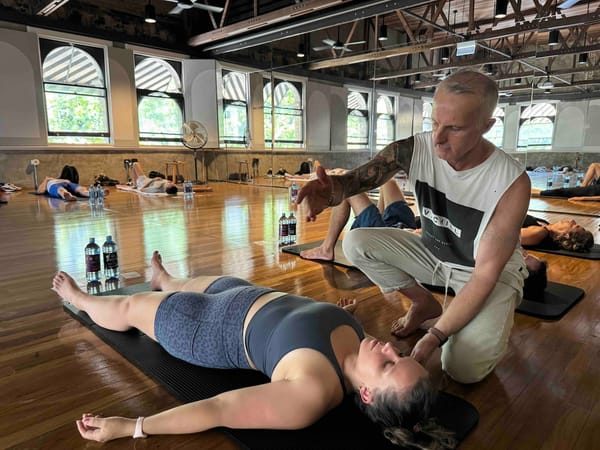
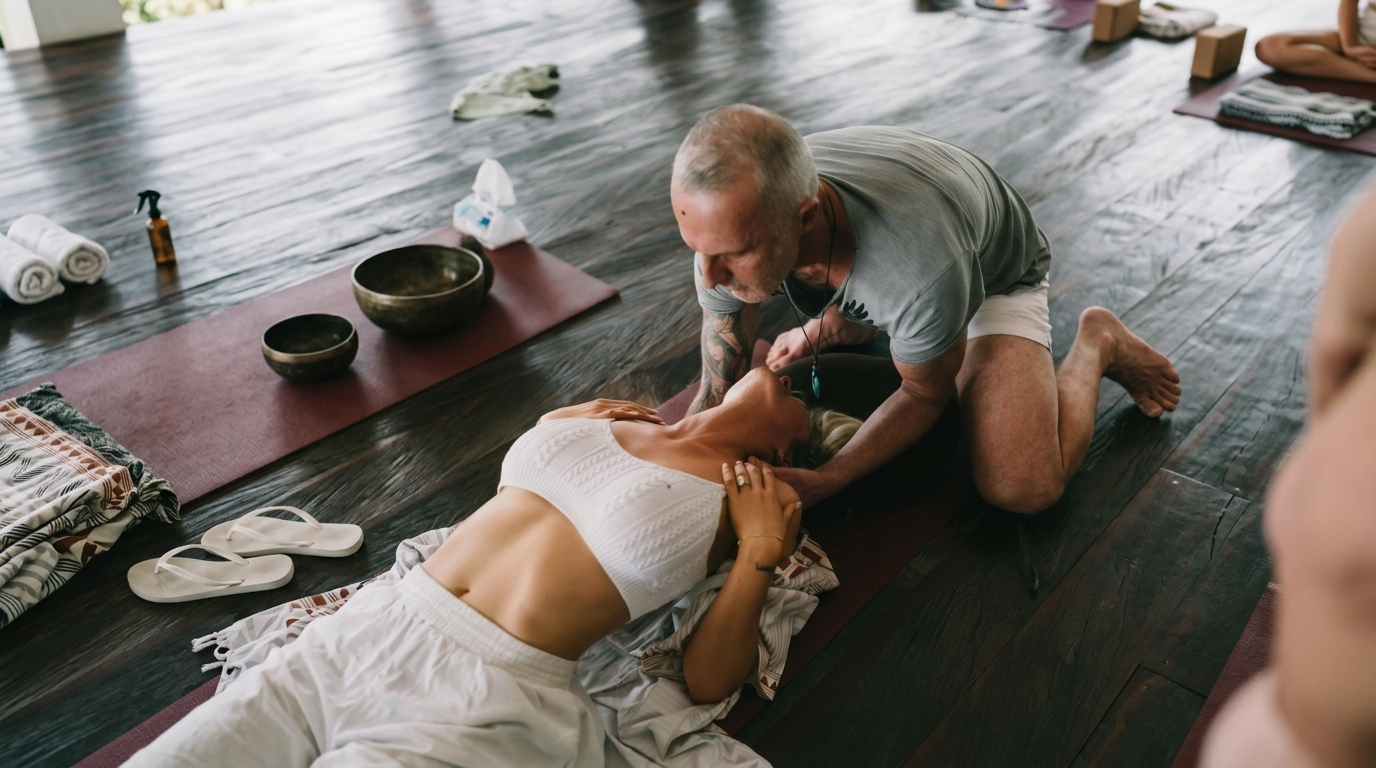
Most sessions last around 90 minutes. They begin with setting an intention and noticing how you are arriving, move into the connected breathing, and finish with time to integrate, whether by sharing your experience or resting in meditation. Allow two hours, especially if you are driving afterwards.
Mark Moon is a certified breathwork practitioner based in Sydney. You can work with him in three ways:
- Private breathwork sessions for one-to-one support with emotional release and personal change.
- Group workshops to experience connection and community.
- Immersive retreats, including Vitality Rising in the Byron Bay hinterland.
Is it safe?
Breathwork is safe for most people of all ages who do not have a heart condition, a serious illness or a pregnancy. If you live with a mental health condition or take medication, speak with your doctor first, the same way you would before starting an intense training program. Is breathwork dangerous? covers safety in more detail.
Frequently asked questions
Is Expansion Breathwork a type of breathwork?
Yes. Breathwork is the umbrella term for intentional breathing practices. Expansion Breathwork is one integrative approach within it, combining conscious connected breathwork, somatic practices and mindfulness.
Is Expansion Breathwork the same as conscious connected breathwork?
Not quite. Conscious connected breathing is one of its parts. Expansion Breathwork adds somatic practices, mindfulness and a four-phase session structure (Calm, Charge, Clear, Connect), with the aim of living life well rather than a single experience.
How is it different from Wim Hof or holotropic breathwork?
Wim Hof breathing is mainly an energising technique, often paired with cold exposure. Holotropic breathwork aims for expanded states through long sessions with music. Expansion Breathwork moves between calming, resilience-building and deeper therapeutic practices, and focuses on the patterns you carry into daily life.
Do I need any experience?
No. Sessions meet you where you are. Many people start with a Sydney group session or a private session.
How many sessions will I need?
Most people have a moving experience in their first session. Some find occasional sessions enough to feel more settled. Others choose a regular block of six to ten sessions to work more deeply with the patterns that come up.