Holotropic Breathwork vs Therapeutic Breathwork in Sydney
 4 min read
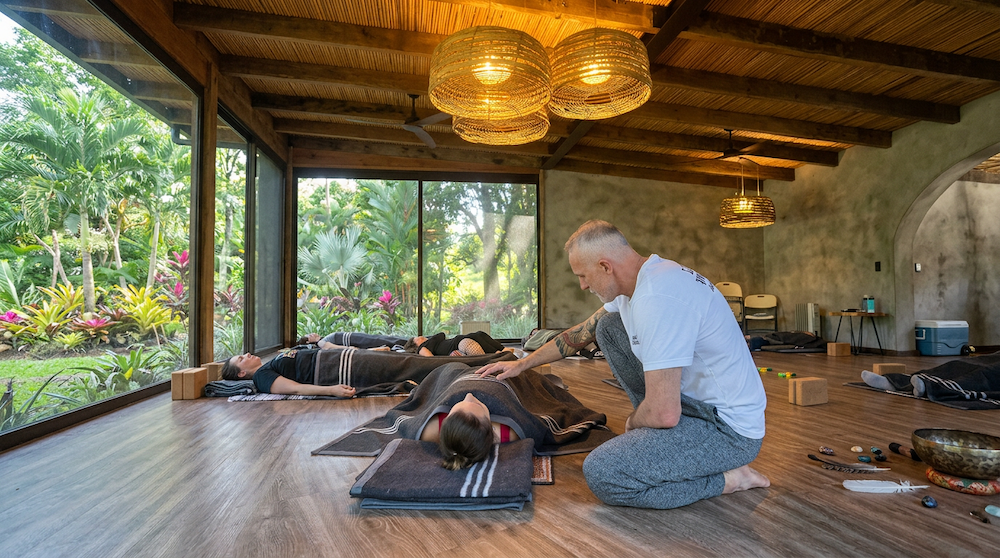
Holotropic breathwork and therapeutic breathwork both use a connected breath, and they are not the same booking. Holotropic work, in the tradition of Stanislav Grof, aims at an expanded state, often in a long session with music, in a group, with a sitter. Therapeutic breathwork, as I practise it in Sydney, is a screened, guided process for the patterns you carry into ordinary life. I am Mark Moon. The method I teach is Expansion Breathwork. It belongs on the therapeutic side of this comparison. I do not run holotropic sessions.
If you want the wider family first, read Expansion Breathwork versus breathwork. This page is the Sydney choice between these two lineages.
What holotropic breathwork is for
Holotropic means moving toward wholeness. The breath is faster and fuller than everyday breathing, held for a long stretch, usually with evocative music, in a room where one person breathes and another sits. The aim is a non-ordinary state. People seek insight, emotional release, and experiences that feel larger than the week.
That container asks a lot. Sessions are long. The state can be intense. You want a facilitator trained in that specific lineage, a clear screening, and a close that does not abandon you when the music ends. If that is the experience you are seeking, book a holotropic facilitator. Do not book me and hope I will turn the session into one.
What therapeutic breathwork is for
Therapeutic breathwork uses conscious connected breathing to meet what the body has stored: tension, emotion, a developmental pattern, a stress that will not lift. The session is a conversation as well as a breath. We know why you came. We can slow down. We finish with integration, so you can stand up and re-enter your life.
In my room that method is Expansion Breathwork. It brings together three things:
- Conscious connected breathwork: a full breath, a relaxed exhale, no pause used as a trick.
- Somatic practice: sensation, posture, and movement, so the body is in the work.
- Mindfulness: noticing what arises, without making a drama of it.
The session moves through Calm, Charge, Clear, and Connect. The goal is not simply to feel better for an afternoon. The goal is to live life well.
The themes that often surface, safety, need, control, expression, identity, intimacy, are described in healing your body and mind. The booking-shaped page for the private hour is therapeutic breathwork in Sydney.
The difference at a glance
| Holotropic breathwork | Therapeutic breathwork, as I hold it | |
|---|---|---|
| Aim | An expanded, non-ordinary state | Awareness, choice, and the patterns of ordinary life |
| Typical shape | Long group session, music, a sitter | About 90 minutes, often private, with a conversation first |
| Breath | Sustained, intensified connected breath | Connected breath that can be gentle or deep, paced to you |
| Close | Integration after a large experience | Integration before you return to the week |
| Who it suits | People seeking that specific lineage and state | People working with stress, emotion, or a pattern, who want a guide to stay |
| In Sydney with me | I do not offer this | Expansion Breathwork, private, group, or retreat |
How to choose in Sydney
Choose holotropic breathwork if you already know that tradition, you want the long arc and the music, and you have found a facilitator trained to hold it. Ask them about screening, about the length, and about who sits with you.
Choose therapeutic breathwork with me if you want to understand why the same brace, the same story, or the same fatigue keeps returning, and you want the work sized to your nervous system on that day. Many people start with a private session. Some begin in a group workshop when they are generally well and want company. A retreat such as Vitality Rising is for later, when you already know the breath.
Neither one is a medical treatment. Neither one replaces a psychologist. If you are in acute distress, start there.
I am a certified breathwork practitioner. The X Breath is a service-area practice in Sydney. There is no public studio to arrive at unannounced. I have been in this work for more than 25 years, inside the therapeutic and developmental line, not the holotropic one.
A note on safety
Both styles can bring strong sensation. Intensity is not the same thing as harm, and it is not the same thing as progress. What makes a session safe enough to be useful is screening, a pace you can stay with, and a real ending. If you have a heart condition, a serious illness, epilepsy, or you are pregnant, speak with your doctor first. The same is true if you live with a mental health condition or you take medication. Is breathwork dangerous? is the longer account.
Frequently asked questions
What is the difference between holotropic breathwork and therapeutic breathwork in Sydney?
Holotropic breathwork seeks an expanded state, usually in a long group session with music. Therapeutic breathwork, as Mark Moon practises it in Sydney, uses conscious connected breathwork, somatic practice, and mindfulness to meet patterns you take back into daily life. His method is Expansion Breathwork. He does not run holotropic sessions.
Is Expansion Breathwork a kind of holotropic breathwork?
No. Both can use a connected breath. Expansion Breathwork is paced through Calm, Charge, Clear, and Connect, and it is aimed at living life well, not at producing a non-ordinary state as the point of the session.
Which should I book first?
If you want a private, screened hour for stress, emotion, or a pattern, book a therapeutic session. If you specifically want holotropic breathwork, book a facilitator of that lineage. The choosing guide is who you should book for breathwork in Sydney.