What Happens During Breathwork? The Biology of Conscious Breathing
 8 min read
What Really Happens When You Breathe Consciously?
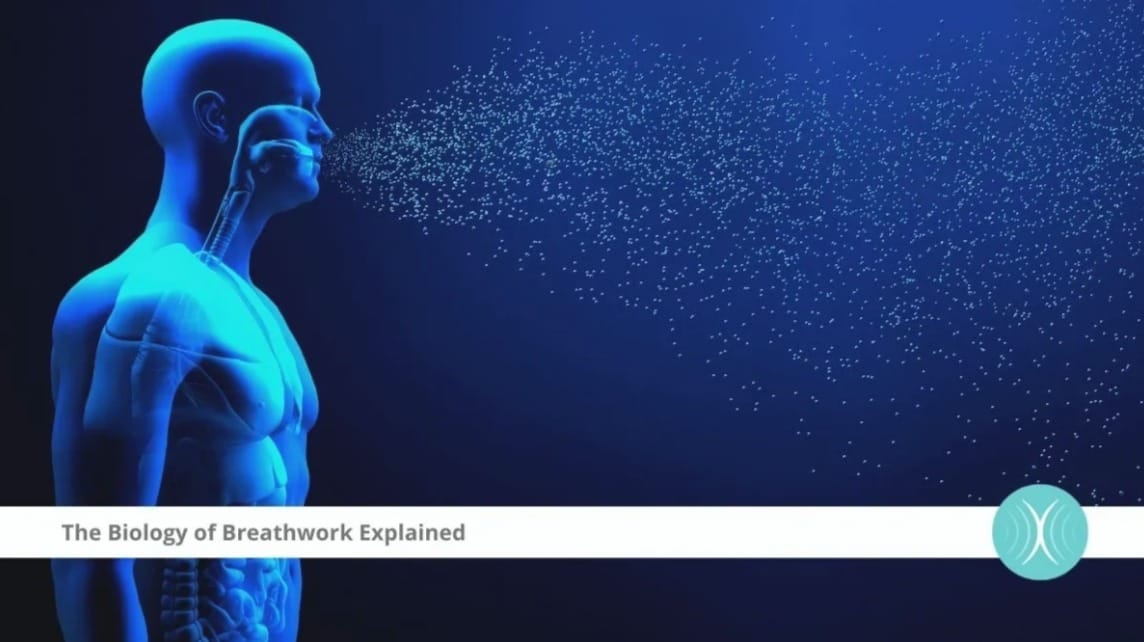
What happens during breathwork is often misunderstood. Most people think it's about releasing trauma, calming the nervous system, or having some kind of emotional breakthrough. And while all of that can happen, something more fundamental is taking place underneath it.
At its core, breathwork is biology in motion, interacting with awareness. When you start to understand it this way, the intensity people feel in breathwork stops being something to fear and becomes something you can work with more directly.
From this perspective, breathwork shifts from being a technique into something much deeper. It becomes the direct interaction between the body's biology, psychology, and awareness. Or more simply, how life expresses itself through the experience of being alive.
Breathwork is about building the capacity to experience life more fully, not escape it.
That's the shift. You are increasing your capacity to stay present with more of what is already here. So instead of asking, "How do I fix what is wrong with me?" the question becomes, "How much of life can I stay present with?"
If you're completely new to breathwork then check out the What is Breathwork page. If you're ready to go deeper, read on.
What Does Breathwork Do to Your Body?
Every breath you take is already regulating your body. Breathwork simply makes that process conscious.
When you change the way you breathe, you begin to influence several systems at once. Most commonly, people are introduced to how breathwork affects the nervous system, but it also influences blood chemistry, the body's energy and tension patterns, and other systems as well.
Breathing can upregulate or downregulate the nervous system, but that is only part of the picture. It can also activate, regulate, mobilise, and reorganise the entire system. A lot of what people feel in breathwork gets labelled as anxiety, overwhelm, or trauma. Sometimes it is, but often it's not. Sometimes it's simply activation.
Energy is moving and sensation is increasing, and the system is becoming more alive. This is not inherently a problem.
The point is not whether activation is happening. It is whether you can stay present with what is arising. This is why breathwork is so powerful. It works at the level where the experience of life is actually created — in the body.
How Does Breathwork Affect the Nervous System?
The breath sits at a unique intersection between the conscious and unconscious body. You can control it, and it also runs automatically. Because of this, it is one of the fastest ways to regulate the nervous system with breathing.
When breathing changes, the balance between activation and regulation shifts. Faster, deeper breathing tends to increase activation, while slower, softer breathing supports regulation. Continuous breathing allows the system to move through cycles of activation, release, and integration.
What many people experience as "too much" is often simply increased activation. An elevated heart rate, heightened sensation, and emotional material rising to the surface are not necessarily signs of trauma. They are signs of a system becoming more responsive.
The observation here is capacity. Can you stay present with what is happening?
Why Do I Feel Tingling During Breathwork?
One of the most misunderstood aspects of breathwork is the role of oxygen and carbon dioxide. Most people assume oxygen is the key driver, but carbon dioxide plays a central role in regulating blood pH and controlling how oxygen is delivered to tissues.
When breathing patterns change, CO2 levels shift. This temporarily alters the internal chemistry of the body. Sensations such as tingling in the hands or face, changes in temperature, lightness, altered perception, or emotional waves are all part of this shift.
These sensations are often misinterpreted as something going wrong, but they are not. They are signs that the system is adapting.
When you understand this, the experience becomes less threatening and more interesting as it shifts from something to fear into something you can observe. Instead of feeling like something is happening to you, it becomes clear that your body is responding and reorganising.
Why Does Breathwork Feel So Intense?
The body holds experience through muscular tension, posture, and fascia. These are not problems. They are adaptive patterns that were once intelligent responses to life.
Over time, these patterns can become fixed, limiting movement, breathing, and expression.
When breathing deepens and becomes continuous, these patterns begin to soften. Stored tension begins to release and shift. This can feel like shaking, heat, emotional release, or waves of sensation moving through the body.
One of the biggest confusions in modern breathwork is the idea that intensity equals danger. It doesn't.
There is a tendency to chase peak experiences, big releases, intense sessions, and altered states. But breathwork is not about peaks. It is about remaining engaged and present across the full spectrum of your experience. Riding the waves of calm and intensity, pleasure and discomfort, stillness and movement. This is what creates real change. Not a single experience, but a shift in how you relate to life.
What Causes Discomfort After a Breathwork Session?
What creates discomfort during or after a session is often not the activation itself, but incomplete cycles. Energy is mobilised, but not fully integrated, so the system remains partially charged.
This lingering activation is often labelled as anxiety, overwhelm, or "unsafe." But the issue is not activation. The issue is a lack of containment and completion. This understanding is central to approaches like Expansion Breathwork, where every session follows a structured arc designed to bring cycles to resolution.
How Does the Body Process Breathwork? The Cycle of Expansion
When you step back, the body follows a natural sequence. Energy builds, you stay present with it, and then it resolves. In my work, I describe this as the Cycle of Expansion:
Calm → Charge → Clear → Connect
The system settles, energy mobilises, expression occurs, and then integration follows. This is not something imposed on the body. It is something that naturally happens when the conditions are right. It is more than just a breathing technique.
It's a biological cycle.
It is about creating the conditions for life to move more freely through the body. When those conditions are present, something natural begins to happen. Your experience expands, not because you are trying, but because that is what life does.
Is Breathwork Safe? Understanding Activation vs. Danger
This is also why I've moved away from viewing breathwork purely through a trauma lens. Trauma can absolutely be part of the picture, but breathwork is not only about trauma.
When everything is framed through trauma, we begin to narrow the experience of being human. Intensity becomes something to avoid, activation is seen as danger, and the focus shifts to staying comfortable rather than becoming more alive.
A more accurate way to understand breathwork is this: it expands the body's capacity to feel, move energy, and stay present with life. This is where many of the benefits of breathwork for mental health naturally emerge, not as a quick fix, but as a result of increased capacity.
Healing can happen within that process, but it is not the primary goal. It's a byproduct of the system becoming more open. This shifts the conversation from "Is this safe?" to "Can I stay present with what is arising?" This is where personal responsibility and growth meet.
Why Does the Environment Matter in Breathwork?
The body does not exist in isolation. The body is always responding to its environment, including its physical surroundings, relationships, sensory input, and internal conditions.
In ecology, organisms do not evolve because they try harder. They evolve because the conditions support the evolution of life. When conditions are supportive, energy flows, systems regulate, and growth emerges naturally. When conditions are not supportive, the system contracts and survival patterns dominate.
Breathwork works in a similar way. It does not force change. It restores the internal conditions where life can reorganise itself. Our environment does the same externally.
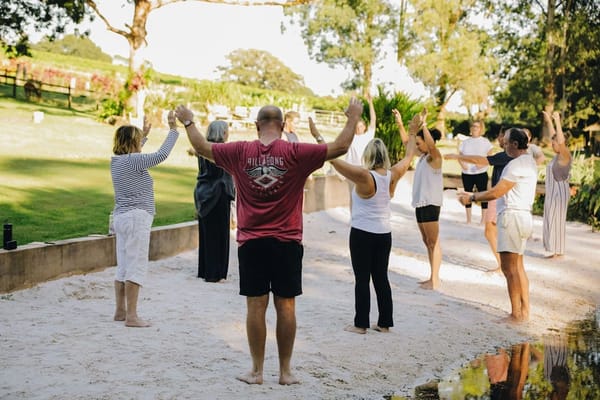
This is why people often feel different in natural environments. Water, open space, natural sound, and reduced noise all influence the nervous system. Life expands when the conditions support it.
This isn't just theory. It's something you feel directly when the environment supports the process. It's also why the setting becomes such an important part of the work, not as an add-on, but as something that actively shapes what becomes possible. In Sydney, the proximity to coastal landscapes and natural settings creates ideal conditions for deeper breathwork. This is a big part of what we explore in the Breath of Life retreat.
What Is Conscious Connected Breathing?
One of the most commonly used approaches in breathwork is conscious connected breathing, which involves a continuous breath with no pause between the inhale and exhale.
This style of breathing increases oxygen flow, alters CO2 levels, activates the nervous system, and mobilises stored energy. But the key is not the technique, it is awareness. The breath moves energy, and awareness allows it to integrate.
Most people approach breathwork trying to do it correctly, but that is not the point. The instruction is simple: stay curious about what your body is experiencing, without analysing, fixing, or performing. Just noticing.
Intensity is not the goal, and it is not a problem. It is information about how your system is organising and adapting.
Breathwork is not about becoming someone else, it is about removing what limits your capacity to experience what is already here.
How Breathwork Changes the Way You Live
As the system begins to reorganise, a few things naturally start to shift:
- You feel more present and engaged. Energy returns, breathing deepens, and sensation increases.
- Expression becomes more available. You begin to act, create, and communicate more freely.
- Awareness expands. You begin to see patterns, conditioning, and the difference between reaction and presence.
You are not becoming more. You are simply experiencing more of what has always been available. More sensation, more presence, more connection. More life.
When these begin to align, the orientation shifts. You stop asking how to fix yourself and start asking how fully you can participate in life.
At that point, the work becomes less about a breathwork session and more about how you live. You may notice new questions starting to arise. What do I actually want? What have I been holding back? What does it mean for me to fully live my life?
Breathwork doesn't answer those questions for you, but it creates the conditions where they begin to emerge naturally. And that is where the deeper value of the work sits. Life is not something to solve. It's something to live.
Breathwork is the doorway. Life is the destination.
Frequently Asked Questions
Q: What should I expect during my first breathwork session?
During your first breathwork session, you can expect to practise continuous conscious connected breathing with no pause between inhale and exhale. You may experience sensations such as tingling in the hands or face, changes in temperature, emotional waves, or waves of energy moving through the body. These are normal responses to shifts in blood chemistry and nervous system activation. A well-facilitated session will guide you through settling, activation, and grounding so you leave feeling integrated.
Q: Why does my body shake or feel tense during breathwork?
The body stores experience through muscular tension, posture, and fascia. When breathing deepens and becomes continuous, these held patterns begin to soften and release. Shaking, heat, and waves of sensation are signs that stored tension is moving, not signs that something is wrong. These are adaptive patterns reorganising as the body becomes more open.
Q: How is conscious connected breathing different from other breathing techniques?
Conscious connected breathing involves a continuous breath cycle with no pause between the inhale and exhale, which distinguishes it from box breathing, 4-7-8 breathing, or other pattern-based techniques. While regulation-based techniques primarily calm the nervous system, conscious connected breathing activates, mobilises, and reorganises the entire system. It works at the intersection of biology and awareness to expand the body's capacity to feel and stay present.
Q: How often should I do breathwork to see results?
Breathwork is not a one-time fix. Neuroplastic change requires repetition, behavioural shifts, and embodied reinforcement. Many people begin with weekly or fortnightly sessions and find that the real shifts emerge through consistent practice over time. The breath opens the door, but integration between sessions is where lasting change stabilises.
Ready to experience what breathwork can do for your body and awareness? Explore Mark Moon's upcoming breathwork events in Sydney or book a private session to begin your journey.
The biology is the same in any city. To experience it in person in Sydney, use the practitioner guide.
About Mark Moon Mark Moon is a Sydney-based breathwork practitioner and the creator of Expansion Breathwork, with over 25 years of experience in holistic wellness. An executive member of the Australian Breathwork Association and registered with the Global Professional Breathwork Alliance, Mark offers 1:1 breathwork sessions, group events, corporate wellness programs, and immersive retreats in Sydney and Byron Bay. Learn more at The X Breath.