How Breathwork Helps with Stress and Anxiety in Sydney
 4 min read
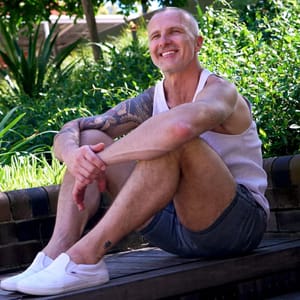
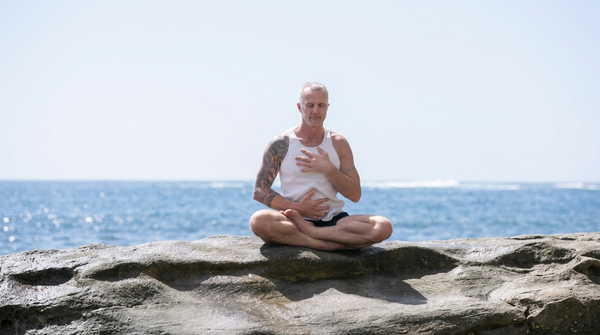
Breathwork helps with stress and anxiety by giving the nervous system a rhythm it can follow, and by letting the body finish a charge it has been holding. It does not switch anxiety off. It changes your relationship with the sensation, and it builds a little more room to stay present. I am Mark Moon. I practise this in Sydney as Expansion Breathwork, with people who want that room in ordinary life, not only a calm hour.
If you searched this because you want a person, not a definition, the hiring page is who to hire for breathwork and stress in Sydney. This page is the how.
What stress is doing in the body
Stress is not only a thought. It is a pace. The breath gets shallow. The jaw sets. The shoulders take a job they were never given. You can be sitting still and still be braced for something that is not in the room.
Anxiety often rides on that brace. The mind looks for a reason, because a reason feels more manageable than a body that will not stand down. Sometimes there is a real problem to solve. Sometimes the problem has ended and the body has not heard.
Breathwork starts there. We use the breath on purpose, so the pace is no longer only a habit.
Three ways the breath helps
I see the help in three layers. A session may touch one of them, or all three.
Regulation. Slow, even breathing, and the quiet start of a connected breath, tell the body it is allowed to come down. People often feel warmer, heavier, or simply less hurried. This is the layer a short practice can offer at home.
Resilience. Repeated, well-held sessions build the capacity to feel activation without being run by it. You meet a stronger sensation, you stay in contact, you come back. That is a skill. It shows up in the week, in the conversation you do not flee, in the night you can lie down.
Renewal. Some stress is a pattern with a history. A grief, a vigilance, a posture you learned when you were young. Therapeutic breathwork, held privately, lets that pattern come into awareness and reorganise. The map I use for those themes is healing your body and mind.
Expansion Breathwork moves between these. A general class usually picks one. The difference is set out in Expansion Breathwork versus breathwork.
What a session actually feels like
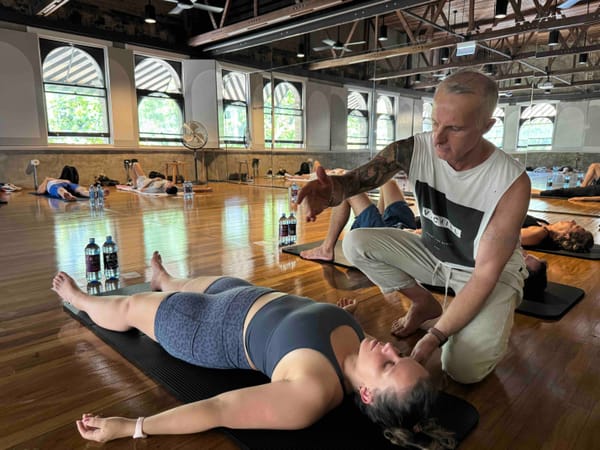
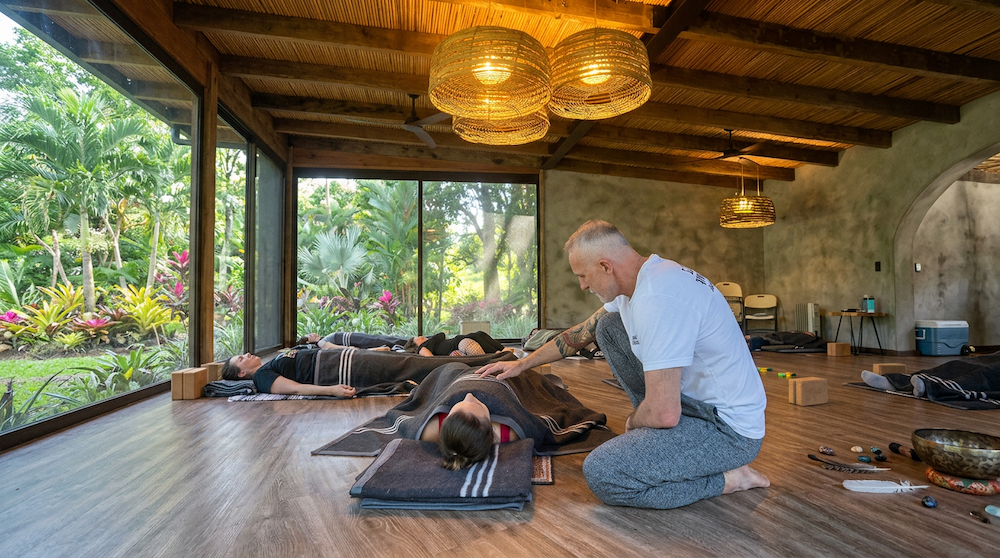
Most private sessions last around 90 minutes. We begin by noticing how you arrived, because the stress is already in the room and there is no point pretending otherwise. The breath is conscious and connected: a full inhale, a relaxed exhale, no gasp, no chase. Sensation may include tingling, emotion, temperature, or nothing dramatic. All of that can be ordinary. What happens during breathwork describes the biology without turning it into a promise.
The close matters as much as the breath. Integration is time to feel, to speak if you want, and to come back before you walk into the street. A practice that ends when the music stops can leave you more activated than you arrived. That is not help. That is an unfinished loop.
What the studies support
Research on breathwork as a whole is encouraging, and it is modest.
A 2023 meta-analysis in Scientific Reports found breathwork associated with lower self-reported stress than control conditions. A 2023 study in Cell Reports Medicine found that about five minutes a day of structured breathing for a month improved mood and lowered physiological arousal. A systematic review in Frontiers in Human Neuroscience linked slow breathing with greater heart rate variability and feelings of relaxation and comfort.
These studies are not about Expansion Breathwork, and they are not a treatment protocol for an anxiety disorder. There is no published trial with my name on it. If a page tells you breathwork cures anxiety, it is selling a story.
How we work with this in Sydney
I am a certified breathwork practitioner. The X Breath is a service-area practice. There is no public studio street.
| What you need | Where to begin |
|---|---|
| A few minutes of calm you can do alone | A slow breath before sleep. You may not need a session. |
| Company, and you are generally well | A group workshop |
| Stress or anxiety that will not lift, or you want privacy | A private session |
| The method, in full | What Expansion Breathwork is |
Screening comes first if you are pregnant, if you have a heart condition, epilepsy, or a serious illness, or if you take medication or live with a mental health condition. Speak with your doctor the way you would before a hard training block. More on that is in is breathwork dangerous?
If you are in acute distress, start with a doctor, a therapist, or a crisis service. The breath can be part of how you care for yourself later. It should not be the only door.
Frequently asked questions
How does breathwork help with stress and anxiety in Sydney?
It helps by settling the pace of the nervous system, by building the capacity to stay with activation, and, in a private session, by meeting the patterns the body has been holding. In Sydney I do this work as Mark Moon of The X Breath, through Expansion Breathwork. It is a practice. It is not a medical treatment for anxiety.
Will one session take the anxiety away?
Sometimes people leave a first session quieter, and clearer. Sometimes the first session only shows you where the brace is. Lasting change is usually a relationship with the practice, not a single peak.
Is this the same as meditation?
They can meet. Meditation often steadies attention. This work uses the breath as a doorway into sensation and pattern, then brings you back. Many people do both.
Sources
- Fincham, G. W., Strauss, C., Montero-Marin, J., and Cavanagh, K. (2023). Effect of breathwork on stress and mental health: A meta-analysis of randomised-controlled trials. Scientific Reports. https://doi.org/10.1038/s41598-022-27247-y
- Balban, M. Y., Neri, E., Kogon, M. M., et al. (2023). Brief structured respiration practices enhance mood and reduce physiological arousal. Cell Reports Medicine. https://doi.org/10.1016/j.xcrm.2022.100895
- Zaccaro, A., Piarulli, A., Laurino, M., et al. (2018). How breath-control can change your life: A systematic review on psycho-physiological correlates of slow breathing. Frontiers in Human Neuroscience. https://doi.org/10.3389/fnhum.2018.00353