Spiritual Regression in Modern Breathwork: A Guide to Discernment
 5 min read
A guide for clients and practitioners navigating cultural mimicry, spiritual regression, and discernment in the healing space.
Published: July 20, 2025 | Category: Breathwork
Spotlighting the Shadow of a Spiritual Persona
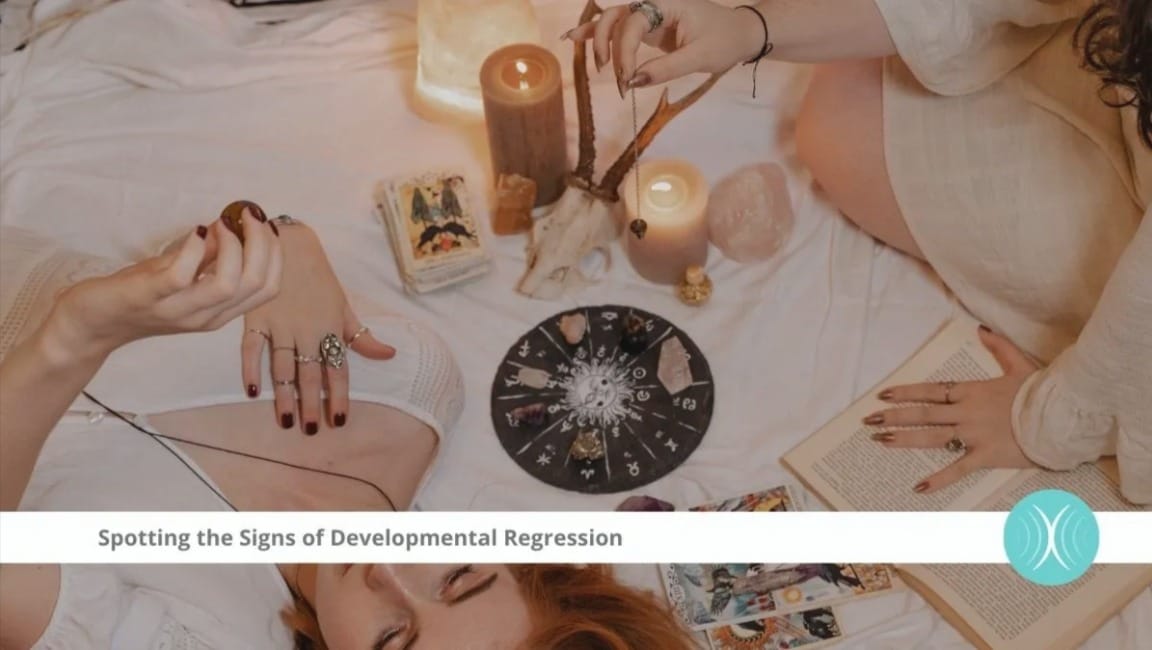
In the evolving world of breathwork and holistic healing, it's common to see practitioners and clients immersing themselves in indigenous or ancestral practices — shamanic rituals, plant medicine, or ceremonial aesthetics. While this may arise from a sincere longing to reconnect with the soul, it's also important to understand the psychological and developmental patterns that may be playing out beneath the surface.
Sometimes, what looks like devotion is actually a regression — especially in those recovering from burnout, identity collapse, or a crisis of meaning. Someone who's been functioning at the Orange level (achievement, rationalism) may under pressure fall back into Amber (tradition, order) or Magenta (tribal fusion). Rather than grow through their challenge, they reach backward — seeking safety in the symbols and rituals of "the ancients."
This longing isn't wrong. But it's worth asking: Are we witnessing spiritual integration — or a spiritual identity crisis dressed in feathers and flowing kaftans?
Understanding these patterns is central to approaches like Expansion Breathwork, which prioritises grounded embodiment over performative spirituality.
Are We Awakening or Escaping Ourselves in Ceremony?
Healing doesn't require a costume. It requires courage. It's not inherently problematic to explore ceremony or ancient wisdom. But it becomes concerning when:
- Magical thinking replaces grounded embodiment
- Ritual becomes performance rather than practice
- Healing is outsourced to "higher powers" or imagined lineages
- Cultural mimicry replaces genuine integration
This isn't about shaming. It's a call for discernment — for both facilitators and seekers.
As a facilitator, the role isn't to judge or ridicule these patterns, but to support the re-integration of power, the re-parenting of the inner child, and the return to present-time truth.
A true spiritual initiation isn't about dressing like a shaman or sitting with outstretched hands awaiting divine downloads. It's about learning to hold more energy in the body, to meet discomfort with presence, and to evolve through each layer of one's psyche.
Because real transformation is found in the nervous system's ability to regulate, receive, and respond — not regress.
Ken Wilber's Developmental Stages of Spirituality
A Map of Meaning-Making
Adapted from Ken Wilber's Integral Theory & Spiral Dynamics
To understand why some seekers regress or project onto ancient systems, it helps to explore how human consciousness evolves. These frameworks describe predictable stages of meaning-making that individuals and cultures move through.
Here's a simplified overview of the core levels:
1. Beige — Survival (Archaic / Instinctive)
Focus: Safety, survival, biological needs
Watch for: Dissociation, trauma-driven behaviour, instability masked as intuition
2. Magenta — Tribal Magic (Animistic)
Focus: Belonging, ritual, magical protection
Watch for: Overuse of ceremonies, "we" language, spiritual mimicry without depth
3. Red — Power God (Egocentric)
Focus: Freedom, charisma, dominance
Watch for: Inflated ego, "I am the vessel" claims, blurred ethical boundaries
4. Amber — Mythic Order (Traditionalist/Ethnocentric)
Focus: Obedience, moral codes, the "one right way"
Watch for: Dogma, guru dynamics, rigid lineages or spiritual gatekeeping
5. Orange — Rational Achievement (Modernist/Sociocentric)
Focus: Success, science, individualism
Watch for: Over-intellectualisation, spiritual bypass through optimisation
6. Green — Postmodern Sensitivity (Relativist/Worldcentric)
Focus: Inclusivity, authenticity, emotional awareness
Watch for: Overidentification with trauma, lack of structure, poor boundaries
7. Teal — Integrative Thinking (Systems-Aware/Planetcentric)
Focus: Complexity, paradox, embodied leadership
Look for: Humility, integration, grounded presence
8. Turquoise — Unity Consciousness (Holistic/Kosmocentric)
Focus: Presence, communion, evolution
Look for: Spacious transmission, silent wisdom, sacred responsibility
Regression or Integration? Recognising the Signs in Yourself and Others
When someone collapses under pressure at Orange, they may retreat to the safety of Amber (rules and rituals) or Magenta (tribal belonging). Without awareness, this can become a form of spiritual bypassing — a return to symbolic spirituality without lived integration.
You may notice:
- Adopting ceremonial dress or sacred names
- Seeking ongoing "upgrades" or spiritual downloads
- Romanticising cultures they have little relationship with
This isn't a flaw — it's a sign the psyche is seeking containment. But true containment comes through grounded support, not symbolic identity. Facilitators don't need to ridicule these stages — but to gently guide seekers back into their body, their power, and their truth.
What to Look for in a Breathwork Facilitator
Ask yourself:
- Do they feel grounded in both body and message?
- Are their boundaries clear? Or do they blur emotional and energetic lines?
- Do they live what they teach — or perform it?
- Do they integrate science and soul? Or rely solely on mysticism?
- Do they hold space — or dominate it?
- Do they stay humble — or project spiritual superiority?
- Are they in a constant identity crisis masked as awakening?
Whether you're exploring breathwork in Sydney or anywhere else, these questions help you find a facilitator who embodies genuine practice rather than performative spirituality.
Self-Inquiry Questions for Spiritual Seekers
Reflect on:
- Am I chasing the feeling of healing without doing the work?
- Am I looking to symbols or ceremonies to feel whole?
- Do I romanticise ancient traditions without learning their roots?
- Am I mistaking confusion for depth?
There is no shame in seeking. But the path becomes clearer when we stop chasing and start listening.
A Practice for Anchoring in Integrity
Let these statements support your clarity, whether you're holding space or stepping into it:
"I honour all lineages while walking my own path with presence."
"I help others return to their power — not perform their spirituality."
"I invite energy to move through the body — not escape it."
You don't need to look like a healer to embody healing. You don't need a ceremony to meet your soul. You just need a nervous system that can hold life — and a heart willing to stay present.
True work is rarely glamorous. It's spacious, structured, and often quiet. That's where real expansion begins.
Frequently Asked Questions
Q: What is spiritual regression in breathwork?
Spiritual regression refers to a return to earlier developmental states, such as magical thinking or symbolic spirituality, often as a response to stress, burnout, or identity loss. In breathwork contexts, it may show up as an over-reliance on ceremony or ritual aesthetics instead of doing the grounded inner work of integration.
Q: How can I tell if a breathwork facilitator is grounded?
Look for embodiment, humility, structure, and clear boundaries. A grounded facilitator lives the work — they don't perform it. They integrate both science and soul, hold space without dominating it, and maintain clear ethical boundaries with clients.
Q: Is it wrong to participate in ceremonies or use rituals?
No — but discernment matters. Ritual becomes a bypass when it replaces integration, embodiment, or lived presence. The key question is whether the ceremony supports your growth or substitutes for it.
Q: How does Expansion Breathwork address spiritual bypassing?
Expansion Breathwork focuses on nervous system regulation, embodied presence, and grounded integration rather than performative or symbolic spirituality. The approach supports seekers in returning to their body and their truth, using breath as a tool for genuine transformation rather than escape.
Ready to work with a grounded, experienced breathwork facilitator? Explore Mark Moon's upcoming breathwork events in Sydney or book a private session to begin your journey toward embodied presence.
About Mark Moon Mark Moon is a Sydney-based breathwork practitioner and the creator of Expansion Breathwork, with over 25 years of experience in holistic wellness. An executive member of the Australian Breathwork Association and registered with the Global Professional Breathwork Alliance, Mark offers 1:1 breathwork sessions, group events, corporate wellness programs, and immersive retreats in Sydney and Byron Bay. Learn more at The X Breath.